By STEPHANIE KISSNER, NFCA Access & Opportunity Committee
Softball has a way of bringing people together. Players may come from different parts of the country, family structures, cultures and circumstances, but once they step onto the field, coaches are generally trying to do the same thing: How can they get to know the person they are coaching and figure out how to help that athlete succeed.
During Native American Heritage Month, that simple idea is a good place to start.
Klamath Cohn (Shasta Tribe, Tuscarora Nation of the Haudenosaunee Confederacy) has experienced softball as both an athlete and a coach, and today coaches high school softball, provides private instruction and works with young athletes in her community.
In talking about Native American athletes and softball, she came back repeatedly to one point: There is no single Native American experience, and coaches should not assume there is. “It’s better to be curious than it is to assume,” Cohn said.
“Every Tribe is unique. Every family is unique.” It may sound simple, but it is an important distinction.
Understanding Tribal Nations
There are currently 575 federally-recognized Tribal Nations in the United States, each with its own history, government, culture and relationship with the Federal government. Tribal governments exercise inherent rights of self-government, and Native American identity often is tied to citizenship of a Tribal Nation.
That makes this more complex than simply placing Native American athletes into another demographic category.
An athlete may be a citizen of a Tribal Nation as well as a citizen of the United States and the state in which they live, while enrollment and citizenship requirements are determined by each Tribal Nation individually. As Cohn explained, “What might have worked for one Native athlete is not going to work for the next. Every Tribe is unique, and every person has their own interaction with their Tribe.”
For a coach, the takeaway isn't that you need to become an expert on every Tribal Nation before coaching a Native athlete; you can't, and Cohn readily acknowledges that herself. “I’m Native, and I don’t know about all these other Tribes,” she said. “I can’t keep up with all of it.”
Instead, the focus should be on getting to know the athlete in front of you.
Access Doesn't Tell You Ability
Softball is deeply rooted in many Native communities. Cohn talked about all-Native tournaments, generations of families playing the game and athletes continuing to play fastpitch well into adulthood. She described softball as part of gatherings and community life in a way that may be unfamiliar to people who have had little exposure to Native communities.
“Softball is a huge part of Native culture and a huge part of communities and gatherings,” she said.
At the same time, the path into today's highly-organized softball system isn't the same for every athlete. Travel softball is expensive for almost everyone, and geographic distance, limited access to specialized instructors or indoor facilities in some rural and reservation communities, equipment costs and the travel required to reach opportunities can make that path considerably more complicated.
None of that should be confused with ability, because looking at an athlete primarily through what they may not have had access to can quickly become its own kind of assumption. Cohn encouraged coaches to look instead at what Native athletes and their communities already bring with them.
“Native communities are enduring, and they’re strong, and they’re resilient,” she said.
That strength-based approach changes the conversation by shifting the focus from why an athlete hasn't had a particular opportunity to what opportunity might help them next, and whether there is an appropriate way to help them reach it.
Sometimes the System Is Different
Healthcare is one example Cohn raised that many coaches may never have considered.
Some Native athletes receive care through the Indian Health Service, Tribal health programs or urban Indian health programs. Depending on the individual, eligibility, location and care needed, navigating that system can involve requirements that look very different from simply finding a nearby provider covered by private insurance. Native athletes may also carry private insurance, and healthcare circumstances vary significantly from person to person.
For a coach, the important part isn't learning every detail of the healthcare system; it is understanding that an athlete's circumstances may not work the way you expect. A missed practice for an appointment, difficulty accessing a particular provider or a delay in getting something handled may have an explanation a coach would never know without asking.
The same can apply to equipment, travel, recruiting and other resources. Some Tribal Nations may have programs available to their citizens that can help with expenses or other needs, so a coach may simply need to know enough to ask an athlete whether a program exists and whether the coach can help with documentation.
Cohn described this as the “nuances of resource navigation.” The answer isn't to assume a Native athlete needs assistance, but to create the kind of relationship where an athlete can tell you when they do.
Coach the Person
When asked what a coach should actually do, Cohn's answer was refreshingly practical. Coaches don't need to have all the answers, but they should be willing to do their own research.
With so much information readily available, learning more about an athlete's Tribal Nation and the resources available to them is a reasonable place to start. Begin with the same genuine interest you should have in every athlete by learning where they come from and, if an athlete is comfortable sharing their Tribal affiliation, learning about that Nation. Look at the Tribe's website and find Native-led resources so you can learn rather than expecting the athlete to become your teacher.
From there, ask questions:
How long is the drive to practice? Who brings you? Are there programs available through your Tribe that might help with equipment? Is there a form I need to sign? Are you navigating college recruiting and would connecting you with someone familiar with Native student recruitment or retention resources be helpful?
Cohn put the larger question even more simply, “How can I help? Where can I insert myself that is appropriate for you?” The word appropriate matters because good coaching isn't about assuming someone needs to be rescued; it is about knowing your athlete well enough to recognize where your role begins — and where it ends.
Community Is Part of the Story
One of the most powerful parts of Cohn's perspective was the way she described the connection between Native athletes and community. “When you recruit a Native kid to a college, you are recruiting their whole Tribal Nation,” she said, describing the strong support that can surround young people as they pursue opportunities beyond their home communities.
That doesn't mean every Native athlete has the same relationship with their Tribe or community, because there isn't one Native experience.
Still, family, kinship and community can be significant parts of identity in many Native cultures, and success can extend well beyond one individual athlete. Cohn described the success of a young person as something that can become “a celebration for everyone in the community.”
That is worth recognizing during Native American Heritage Month because the conversation shouldn't focus exclusively on barriers. Native athletes are competing, succeeding and contributing throughout softball, and Native communities have long histories with sport.
Native athletes bring talent, resilience, culture, family and community with them to the game.
Curiosity Over Assumption
Coaches aren't expected to know everything, and pretending to know may be more damaging than simply acknowledging what you don't. Cohn called it having “a posture of humility.”
“It’s totally okay to not know,” she said. “We can’t all know everything.”
What coaches can do is take responsibility for learning by asking respectful questions and researching an athlete's Tribal Nation rather than assuming one Native athlete's experience applies to another. Coaches can also pay attention to language, mascots, music and traditions within their own programs that may rely on stereotypes or misrepresentation and, when they don't know, find credible Native-led resources and listen.
Perhaps most importantly, don't ask one Native athlete, coach or educator to speak for everyone. When discussing what the NFCA should get right during Native American Heritage Month, Cohn's answer was clear: Avoid “speaking for Native people” and instead help people find reliable resources and organizations where Native people are already telling their own stories.
That is also why the conversation shouldn't end when November does. For coaches, this really comes down to something we already ask them to do every day — know your athletes, be curious without assuming, learn what you don't know and, when an athlete tells you what they need, listen.
About Klamath
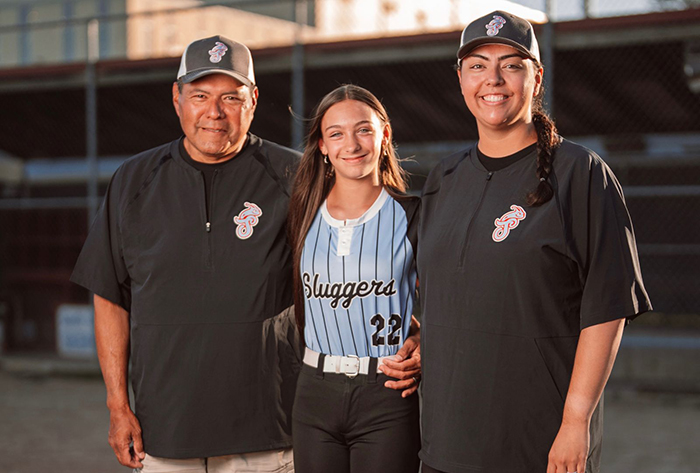
Klamath Cohn (Shasta Tribe, Tuscarora Nation of the Haudenosaunee Confederacy) is a softball coach, instructor and educator. She coaches high school softball, provides private instruction, and works with young athletes in her community. She is the founder and Executive Director of Salem Sluggers Fastpitch, a non-profit dedicated to youth development through athletics. Professionally, she has worked in Tribal Cultural Resources Management and Tribal Public Health and Prevention. Her work brings together her passion for softball, education, youth development, and strengthening Tribal Sovereignty.
Additional resources
Native Knowledge 360° — Smithsonian National Museum of the American Indian
Educational resources developed with Native communities to help replace common misconceptions with more accurate information about Native peoples, Tribal Nations, history, culture and contemporary life.
Indigenous Athletics Advancement Council (IAAC)
IAAC works to support Indigenous athletes and hosts the Native Student-Athlete Summit.
NDNSPORTS — Native American Sports News
A sports-focused resource highlighting Native athletes from youth through collegiate and professional competition.
Bureau of Indian Affairs — Tribal Leaders Directory
A resource for learning about the 575 federally-recognized Tribal Nations and locating individual Tribal governments and official information.
Indian Health Service — Purchased/Referred Care
Information about IHS healthcare resources and the Purchased/Referred Care program.